

PABX System Installation Dubai: A Complete Guide to Analog-to-IP Migration
If you have a business in Dubai and you are still using a phone system, you have probably had some problems already. The equipment is getting old; it is hard to find parts, and every time you want to add a new phone line, it is like a big project. That is why many companies in Dubai are now looking at PABX system installation Dubai services to make their office communication better without starting from the beginning.
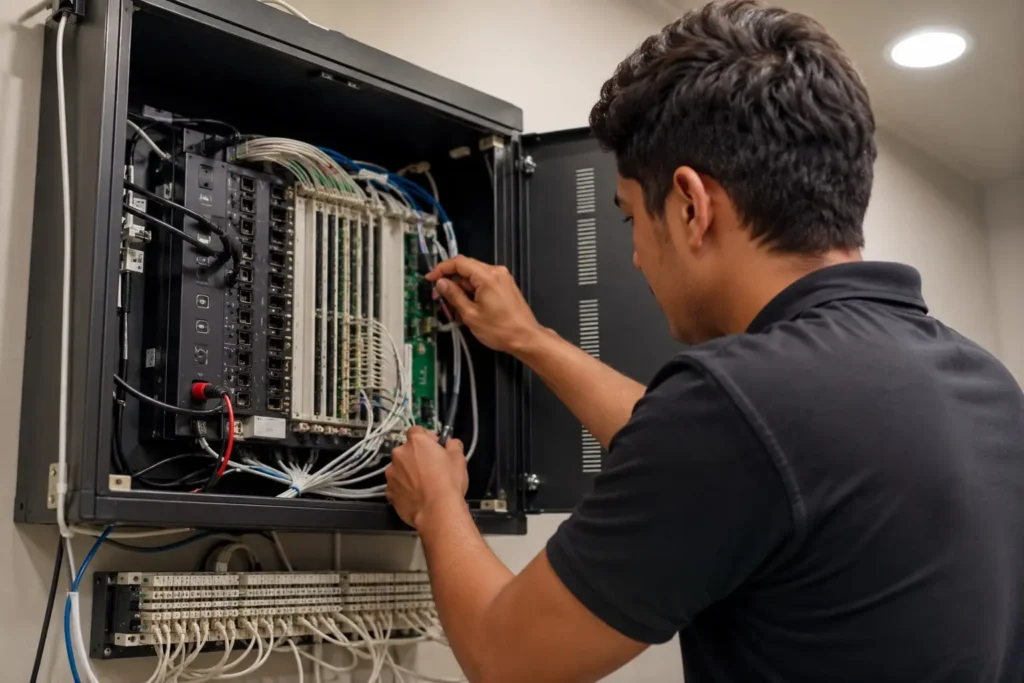
Old phone systems were good for their time. They have some big problems in todays fast business world:
- The equipment is old and expensive to fix
- It is hard to add phones when the company grows
- It is costly. Takes a long time to add new phone lines
- It does not work well for people who work from home or in locations
- It does not work well with business tools like customer relationship management systems
- It is hard to use phone features like automatic menus or call queues
IP PABX systems solve many of these problems by using the same network that your computers use. A proper PABX system installation Dubai is not just about replacing a box in a server room. It involves checking the network, setting up the system carefully, giving everyone new phones, connecting to the internet, testing the phone system, testing everything, and teaching your staff how to use the new system. If you skip any of these steps, things can go wrong.
What is a PABX system?
PABX stands for Private Automatic Branch Exchange. It is basically the phone system inside your office that lets everyone call each other using numbers instead of full phone numbers. It also connects your office to the world.
A traditional PABX system does things like:
- Letting colleagues call each other quickly
- Connecting calls to the world
- Directing calls to the right person or department
- The automatic menu that says “press 1 for sales, press 2 for support”
- Moving calls between people or lines
The difference between a PABX system and a modern IP PABX system is how the phone calls actually work. If you want to know more about how it works, you can read about Voice over IP. If you want a deeper technical breakdown of how that underlying technology works, this overview of Voice over IP is a solid reference point.
| Traditional PABX | IP PABX |
| Uses analog/digital telephone lines | Uses IP networks |
| Limited scalability | Easily scalable |
| Separate cabling may be required | Can use existing Ethernet infrastructure |
| Limited remote access | Supports remote extensions |
| Hardware-dependent | Software/network-based |
| Fewer integrations | CRM, recording, IVR and UC integrations |
What Is Analog-to-IP Migration?
This is really the heart of the topic, so let’s slow down a bit here. Analog to IP migration simply means shifting your internal phone infrastructure away from old analog lines and toward an IP-based communication system that runs over your data network.
The good news is that businesses don’t have to rip everything out overnight. There are a few realistic paths:
- Full replacement – Retire the old PABX and analog handsets entirely, and install a full IP PBX with IP phones.
- Hybrid migration – Keep some existing analog phones or lines running while gradually introducing IP technology alongside them.
- Gateway-based migration – Connect your existing analog devices to the new IP system through an analog telephone adapter or gateway so nothing goes to waste immediately.
Whichever route makes sense, working with an experienced IP PBX supplier in Dubai means you get guidance on which approach actually fits your budget and business size, rather than just being sold new equipment for the sake of it.
Why Dubai Businesses Are Moving from Analog PABX to IP PABX
Better Scalability
Adding a new employee shouldn’t mean calling an engineer out to rewire your office. With IP PABX, new extensions can usually be added through software in minutes.
Support for Remote Employees
IP extensions aren’t tied to a physical desk phone in one location. Staff working from home, from a branch office, or even travelling can stay connected to the same office phone system.
Advanced Calling Features
Modern IP systems open the door to features that analog setups simply can’t offer well:
- IVR / auto attendant
- Call recording
- Call forwarding
- Call queues
- Voicemail
- Call monitoring
- Conference calling
Better Integration
IP telephony connects naturally with the tools your team already uses — CRM platforms, Microsoft Teams or other collaboration apps, contact center software, and various business applications. Many offices upgrading their handsets alongside this shift end up working with a Cisco IP Phone supplier in Dubai, since Cisco devices tend to integrate smoothly with these kinds of business tools.
Easier Management
Instead of physically reconfiguring hardware, administrators can manage extensions, users, and call settings from a centralised dashboard.
Improved Business Communication
Put simply, IP telephony gives your business a more flexible communication backbone — one that can grow and adapt as your needs change, instead of holding you back.
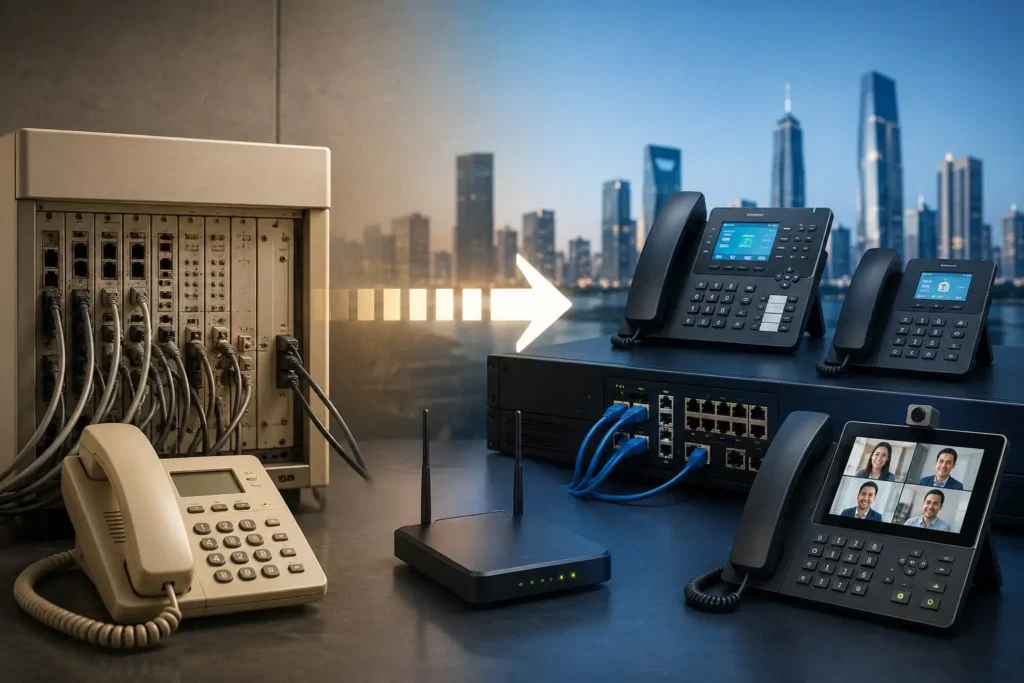
When Should You Replace an Analog PABX System?
Not sure if you actually need to migrate yet? Here are some common warning signs:
- Your PABX hardware is outdated
- Spare parts are difficult to find
- Adding extensions feels complicated or expensive
- You’re dealing with frequent telephone system failures
- Maintenance costs keep climbing
- There’s no support for remote extensions
- You have no call recording or IVR capability
- Scalability is limited
- Integration with other business tools is basically non-existent
- Your business is expanding, and the current system can’t keep up
If several of these sound familiar, it’s probably a good time to evaluate a proper business PABX system Dubai upgrade before a failure forces your hand. Talking to a trusted IP PABX supplier in Dubai early on can help you figure out whether a full replacement or a gradual migration makes more sense for your setup.
PABX System Installation Process in Dubai
A professional PABX installation in Dubai typically follows a structured process rather than a quick plug-and-play job. Here’s what it generally looks like.
1. Business Requirement Assessment
This covers things like the number of employees, how many extensions you’ll need, expected call volume, your current infrastructure, required features, and where the business is headed in the next few years.
2. Existing System Assessment
For an analog-to-IP migration specifically, the installer needs to look at:
- Existing PABX hardware
- Current telephone lines
- Existing cabling
- Analog devices still in use
- Current network infrastructure
3. IP PABX System Selection
The right system depends heavily on business size, number of users, required features, and future scalability. Depending on your requirements, this might involve brands like Cisco, Grandstream, Yealink, or a well-known name like an Avaya IP PBX supplier in Dubai if your team is already familiar with that ecosystem.
4. Network Preparation
Before any phones go live, the network itself needs to be ready. This usually covers:
- LAN infrastructure
- PoE switches
- VLAN configuration
- Internet connectivity
- QoS (Quality of Service) settings
- Firewall configuration
- General network security
5. PABX Installation and Configuration
This is the core technical stage: installing the IP PBX, creating extensions, configuring call routes, setting up SIP, and configuring IVR menus, ring groups, call queues, voicemail, and user permissions.
6. IP Phone Installation
Once the backend is ready, IP phones are deployed and configured for each user. A reliable IP Phones in Dubai provider will also make sure firmware and settings are consistent across all devices.
7. Analog Device Integration
If your business wants to keep a few analog devices running — maybe an old fax line — gateways can bridge them into the new IP system.
8. Testing and Troubleshooting
Nothing goes live without proper testing: internal calls, incoming and outgoing calls, call transfers, IVR, voicemail, call recording, remote extensions, and failover recovery all need to be checked.
9. User Training and Handover
Finally, basic training for both regular users and system administrators makes sure everyone actually knows how to use the new setup from day one.
Analog-to-IP Migration: What Happens to Existing Telephone Numbers?
One of the biggest worries business owners have is losing their existing phone numbers during migration. The good news is that switching your internal telephone system doesn’t automatically mean losing your business numbers.
In most cases, this involves:
- Keeping your existing published numbers
- Setting up SIP trunks to carry calls over IP
- Number portability, where it’s supported by your provider
- Integration with your telecom provider’s PSTN network
- Reconfigured call routing to match your new system
That said, whether a specific number can be ported over depends on your telecom provider and the number itself, so it’s worth confirming this early with whoever handles your analog to IP migration.
How Much Does PABX Installation Cost in Dubai?
There’s no single fixed price here since costs vary quite a bit based on:
- Number of users/extensions
- The IP PBX model chosen
- Number of IP phones needed
- SIP trunk requirements
- Your existing network infrastructure
- Whether analog gateways are needed
- IVR or contact-center features
- Overall installation complexity
- Configuration requirements
- Ongoing maintenance and support
If you want an accurate figure, it’s best to request a customised PABX installation quotation based on your specific business requirements rather than relying on a generic number online.
Common Challenges During Analog-to-IP Migration
Migration projects don’t always go smoothly, and it helps to know what can trip things up:
- Poor network infrastructure that wasn’t built for voice traffic
- Incorrect bandwidth planning
- Voice quality issues (choppy audio, delays)
- Incorrect QoS configuration
- SIP configuration problems
- Firewall or NAT issues blocking calls
- Incompatible legacy equipment
- Number migration hiccups
- User resistance to unfamiliar new phones
- Poor planning around extensions and call routing
Most of these issues come down to inexperience rather than the technology itself, which is why professional installation and configuration really do matter for a smooth PABX system installation Dubai rollout. Choosing the right IP Phone solutions in Dubai from the start also goes a long way toward avoiding compatibility headaches later on.
How to Choose a PABX Supplier in Dubai
When evaluating suppliers, it helps to look at:
- Experience with IP PABX deployment
- Availability of genuine, licensed equipment
- Installation and configuration expertise
- Multi-brand support (not locked into one manufacturer)
- Solid network knowledge
- SIP/VoIP expertise
- Migration planning capability
- After-sales support
- Ongoing maintenance services
- Ability to scale with your business over time
A good supplier will walk you through all of this honestly before recommending any specific equipment, rather than pushing whatever they happen to have in stock.
IP PABX vs Traditional PABX: Which Is Better for Your Business?
There isn’t a one-size-fits-all answer here.
Traditional PABX still works fine for smaller businesses with simple needs, older infrastructure, and no immediate plans to scale.
IP PABX, on the other hand, tends to suit businesses that want scalability, remote communication support, advanced calling features, and integration with modern business software.
The right choice really depends on your company’s current infrastructure and where you’re planning to take the business, not on which option sounds more “modern”.
Conclusion
At the end of the day, analog-to-IP migration isn’t just about replacing old telephones with newer ones it’s about giving your business a more flexible, scalable communication foundation that can actually keep up with how modern teams work. Whether you’re dealing with outdated hardware, planning for growth, or just tired of maintenance headaches, a proper PABX system installation Dubai project can solve a lot of these problems at once.
From PABX supply and IP PBX installation to configuration, IP phone deployment, analog-to-IP migration, SIP/VoIP integration, and ongoing maintenance and support, getting the right partner involved from the start makes the entire process far smoother.
If your Dubai business is ready to move on from an outdated analog system, it’s worth reaching out to a trusted local provider for a proper site assessment and a tailored migration plan built around how your team actually works.
Frequently Asked Questions
It’s the process of setting up a private phone exchange system for a business, including hardware/software setup, network configuration, extension creation, and testing.
Traditional PABX runs over analog or digital phone lines, while IP PABX runs over your data network, offering more flexibility and features.
Yes. You can do a full replacement, a hybrid setup, or a gateway-based migration depending on your needs and budget.
In most cases, yes, though it depends on your telecom provider and whether number portability is supported for that particular number.
It varies by business size and complexity, but a straightforward setup can often be completed within a few days, while larger migrations may take longer.
Yes, through an analog telephone adapter or gateway that bridges old devices into the new IP-based system.
Costs depend on the number of users, equipment chosen, network readiness, and features required — a customised quote is the best way to get an accurate number.
Not always. Many businesses can use their existing Ethernet infrastructure, though some network upgrades (like PoE switches or QoS configuration) may be recommended.
They’re closely related — a VoIP phone system typically refers to the phones and calling technology, while an IP PABX refers to the whole exchange system managing those calls.
Some brief downtime is normal during cutover, but a well-planned migration keeps this to a minimum, often scheduled outside business hours.