

10 Key Features of IP Telephony for Modern Businesses in Dubai
Business communication is the foundation of every organisation. Whether you run an office in Business Bay or manage a company with branches across the UAE, your team needs a phone system that just works, a phone system that connects your team to customers, colleagues and partners without dropped calls or missed opportunities. I have seen many companies switch to an IP phone system Dubai businesses can scale with rather than staying with the old copper‑wire setup that has been unused for years.
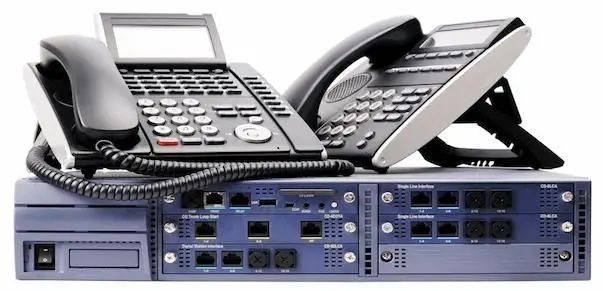
Traditional telephone systems have worked for years, but they were not made for today’s business needs. Teams are hybrid. Customers expect answers. Growth should not force you to replace your whole phone network whenever you hire ten more people. IP telephony solves this problem by sending voice calls over your internet connection instead of a separate phone line. When IP telephony is paired with an IP PBX (Internet Protocol Private Branch Exchange), you receive a communication system that is truly designed for how modern offices operate.
If you are exploring IP Phones in Dubai for your business, knowing what these systems can really do will help you choose the setup, not just the cheapest one.
What Is IP Telephony, Really?
In plain terms, IP telephony turns your voice into digital data and sends it across a network, the same way an email or a video call travels. Instead of your voice riding on a dedicated copper line, it’s broken into small data packets that move over your internet or private network connection.
A typical setup for an IP telephone system in Dubai includes a few core pieces:
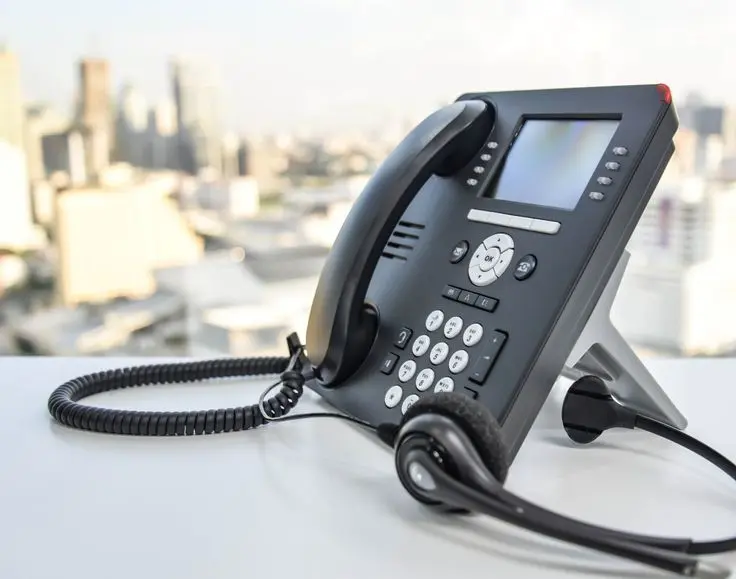
- IP phones (the handsets on people’s desks)
- An IP PBX to manage everything centrally
- Network switches and routers
- SIP trunks connecting you to the outside phone network
- Call management software
- Headsets and other accessories
The IP PBX is really the brain of the operation. It handles extensions, call routing, voicemail, conferencing, and a long list of other features that would be expensive, or flat-out impossible, to bolt onto an old analogue system.
How Does It Actually Work?
Here’s the simplified version: An employee speaks into their IP phone, their voice gets converted into digital packets, and those packets travel through the company network to the IP PBX. From there, the PBX routes the call, either to another extension internally or out through a SIP/VoIP provider to an external number.
It looks roughly like this:
IP Phone → Network Switch → IP PBX → SIP/VoIP Provider → External Number
This setup gives businesses far more control over how calls are handled, and it opens the door to features that traditional phone lines simply can’t offer.
10 Key Features of IP Telephony Every Dubai Business Should Know
Modern systems do a lot more than let people make calls. Here are the IP telephony features that tend to matter most for businesses operating in Dubai’s fast-paced market.
1. High-Quality Voice Communication
Clarity matters, especially when you’re closing a deal or handling a support call. A properly configured IP phone system Dubai companies rely on can support HD voice codecs, which noticeably improves call quality compared to older analogue lines.
This matters most for:
- Customer service teams
- Sales departments
- Call centres
- Front-desk reception
- Remote employees dialling in from home
That said, voice quality isn’t automatic; it depends on your network. Bandwidth, latency, jitter, and Quality of Service (QoS) settings all play a role, so it’s worth getting your network properly assessed before rollout.
2. Call Forwarding
Nobody wants a missed call to turn into a lost customer. Call forwarding lets incoming calls automatically redirect to another extension, a mobile number, or even a colleague in a different department when someone’s away from their desk.
It’s a small feature, but it quietly prevents a lot of missed business.
3. Call Transfer
Ever been told, “Let me transfer you,” and then the call just disconnects? A good business IP phone system avoids that. Employees can pass calls between departments smoothly, say, from reception straight to IT support, without making the customer hang up and dial again.
4. Auto Attendant and IVR
Interactive Voice Response (IVR) is that familiar “Press 1 for Sales, Press 2 for Support” menu, and it’s genuinely useful once call volumes climb. Instead of tying up a receptionist answering every single call, the system routes people automatically to the right team.
For businesses fielding a high volume of calls daily, this alone can be a huge time-saver.
5. Voicemail That Works For You
Voicemail on a modern VoIP phone system in Dubai setup goes well beyond a simple recorded greeting. Expect features like:
- Individual voicemail boxes per extension
- Voicemail-to-email delivery
- Remote access to messages
- Custom greetings per department
It means an important message never gets lost just because someone stepped away.
6. Conference Calling
Whether it’s an internal team huddle or a client discussion involving people in different offices, conference calling lets multiple participants join a single call without needing a separate video platform for basic voice meetings. For companies with distributed teams, this cuts down on tool overload.
7. Scalability
This is probably the single biggest reason businesses move away from traditional phone lines. With a well-designed IP PBX, adding new employees, extensions, or even entire departments doesn’t mean tearing out your infrastructure.
A company starting with 20 employees and 20 IP phones can grow to 50 (or 500) without a complete system overhaul, just additional capacity and configuration.
8. Remote and Mobile Communication
Offices aren’t the only place work happens anymore. People log in from home, from client sites, from other emirates, and sometimes from other countries entirely. Business IP phones Dubai companies deploy today often support softphone apps and remote extensions, meaning staff stay reachable on their office number no matter where they’re actually sitting.
For organizations with branches across the UAE or hybrid teams, this flexibility isn’t a nice-to-have anymore, it’s expected.
9. Call Recording and Monitoring
Recording calls isn’t just about compliance (though that matters too). It’s a practical tool for:
- Training new staff
- Reviewing customer service quality
- Resolving disputes
- Meeting industry compliance requirements
Just make sure whatever solution you choose complies with UAE privacy and telecom regulations before switching recording on by default.
10. Integration With Business Applications
The best systems don’t operate in isolation. Many IP telephony platforms integrate with CRMs, helpdesk tools, and email systems, so when a customer calls, their details can pop up automatically. That kind of context turns a routine call into a much more personalised interaction, and it’s one of the more underrated advantages of moving to a proper IP telephone system in Dubai.
IP Telephony vs Traditional Phone Systems
Here’s a quick side-by-side to put things in perspective:
| Feature | Traditional Phone System | IP Telephony |
| Call transmission | Dedicated telephone network | IP/internet network |
| Scalability | Often limited | Highly scalable |
| Advanced features | Depends on hardware | Wide range available |
| Remote extensions | Difficult to support | Easy to configure |
| App integration | Limited | Strong integration options |
| Management | Hardware-focused | Network/software-based |
| Business flexibility | Lower | Higher |
The right choice ultimately depends on your existing infrastructure, budget, and where your business is headed, but for most growing companies, the flexibility of IP telephony tends to win out.
Popular IP Phone Brands for Businesses in Dubai
Picking hardware isn’t just about price. Compatibility, reliability, and after-sales support matter just as much. A few well-established names worth knowing:
Avaya — built for organizations that need professional-grade call handling and integration with broader business communication platforms.
Cisco — a strong fit for companies already running Cisco networking infrastructure; you can explore options through a Cisco IP Phone supplier in Dubai if that’s your existing environment.
Grandstream — flexible enough to cover everything from a basic office extension to feature-heavy executive phones.
Panasonic — a dependable option for standard office telephony needs.
D-Link and eLink — worth considering for specific requirements depending on your network setup.
Don’t pick a brand first and figure out the rest later. Start with what your business actually needs, then find an IP Phone supplier in Dubai who can match hardware to your existing IP PBX and SIP environment.
If you want the deeper technical background before deciding on anything, how VoIP works is a solid place to start.
How to Choose the Right System for Your Business
A few practical things to think through before you commit:
- Number of users — how many people actually need their own extension?
- Required features — call forwarding, conferencing, multi-line support, PoE, video calling?
- PBX compatibility — does the hardware match your existing SIP environment?
- Network readiness — can your current network handle voice traffic without choking?
- Room to grow — will this setup still make sense in two years?
- Support availability — who do you call when something breaks?
It also helps to look at experienced providers of IP PABX supplier in Dubai services, since PBX configuration is where most of the real value (and most of the potential headaches) actually lives.
Why Professional Installation Actually Matters
A poorly configured setup causes real problems — dropped calls, one-way audio, registration failures, network congestion, and security gaps nobody notices until it’s too late. None of these are hardware problems; they’re deployment problems.
Getting network capacity, VLAN setup, QoS, and SIP configuration right from day one saves a lot of frustration down the line. If you’d rather not gamble on it, working with a provider offering IP Phone Solution in Dubai services takes that initial risk off your plate.
Once the system is live, the work isn’t really over, phones need firmware updates, PBX settings need occasional tweaks, and issues do come up. That’s where ongoing IT AMC Dubai support earns its keep, catching small problems before they turn into a full afternoon of downtime.
And if your setup runs on Avaya specifically, having access to dedicated Avaya IP Office Support UAE resources is worth having in your back pocket too, since Avaya systems often need vendor-specific troubleshooting.
Wrapping It Up
IP telephony is no longer a simple choice instead of old phone lines. It is now a main part of how modern companies talk to each other. Features like call forwarding, IVR, conference calls, recording, remote access and CRM integration all add up to a system that grows with your business of slowing you down.
If you need a few desk phones for a small office or a full setup across many departments, picking the right mix of equipment, PBX, network setup and support can make a big difference. For companies looking at an IP phone system, Dubai providers who can actually help are worth talking to. It’s good to speak with a team that knows the technology and also understands the everyday challenges of running a business here.
FAQ
It’s a technology that transmits voice calls over an IP network instead of relying solely on traditional phone lines.
An IP PBX (Internet Protocol Private Branch Exchange) is the business phone system that manages internal extensions and external calls over an IP network.
Common features include call forwarding, call transfer, voicemail, IVR, conference calling, call recording, remote extensions, scalability, and CRM integration.
Avaya, Cisco, Grandstream, Panasonic, D-Link, and eLink are all commonly used, depending on your PBX, budget, and feature needs.
Yes — with the right PBX and network setup, remote extensions and softphone apps let staff stay connected from anywhere.
Definitely. Systems can scale up as you grow, so you’re not stuck rebuilding everything later.
They need an IP network to function. External calls typically require internet or IP-based voice connectivity, while internal calls can run over your local network alone.
It can be, but businesses should confirm their recording practices comply with applicable UAE privacy and telecom regulations before enabling it.
It varies by company size and network readiness, but a professional provider can usually assess and deploy a mid-sized office system within a few days to a couple of weeks.
They’re closely related — VoIP refers to the technology of transmitting voice over IP networks, while IP telephony is the broader term for the phones, PBX, and systems built around that technology.